Measurely
Creative Technology and Design - Senior Capstone Project
Timeline: ~12 weeks, Jan-Apr 2026, plus pre-project research
Role: experience design, programming, connectivity
Introduction
SUMMARY
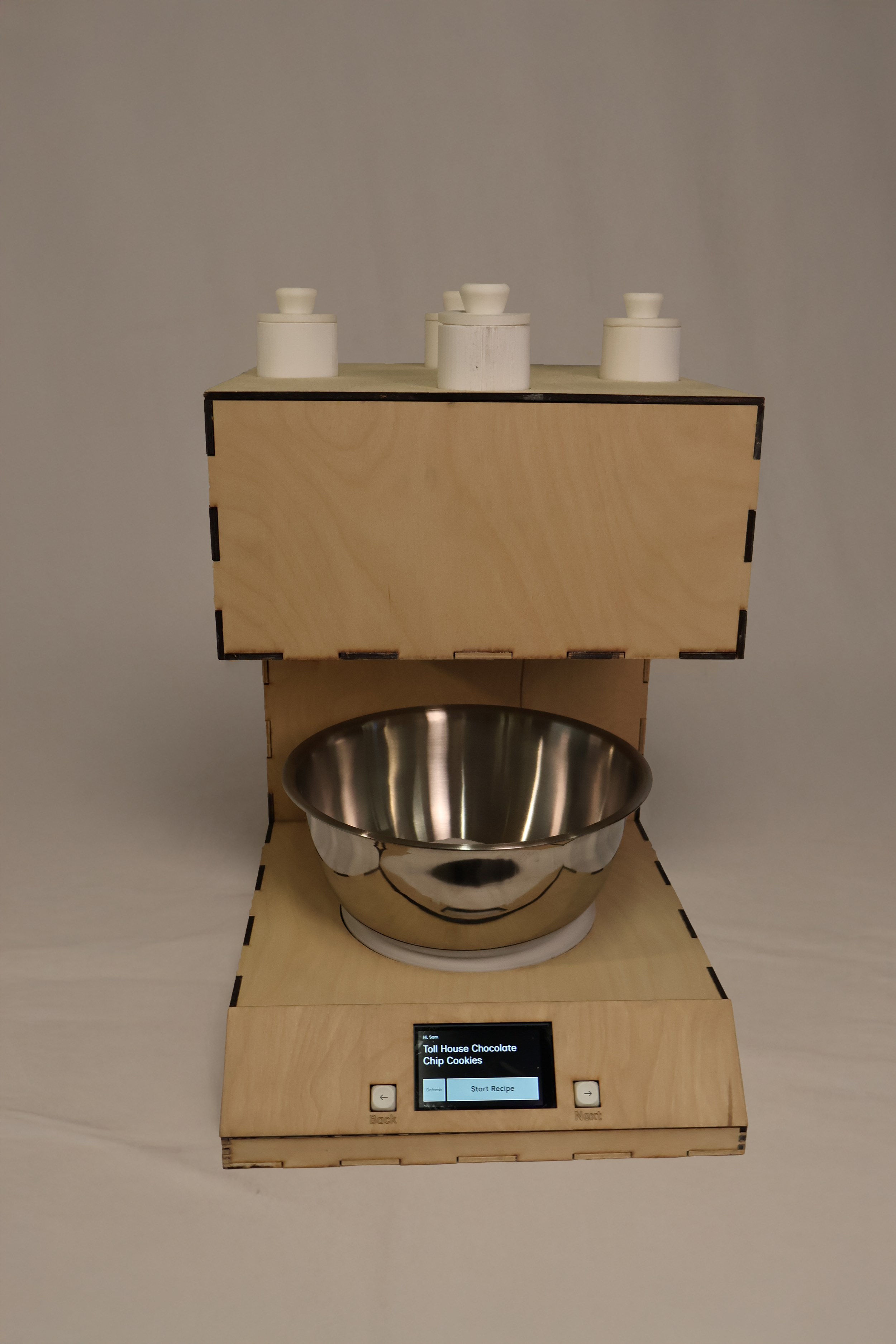
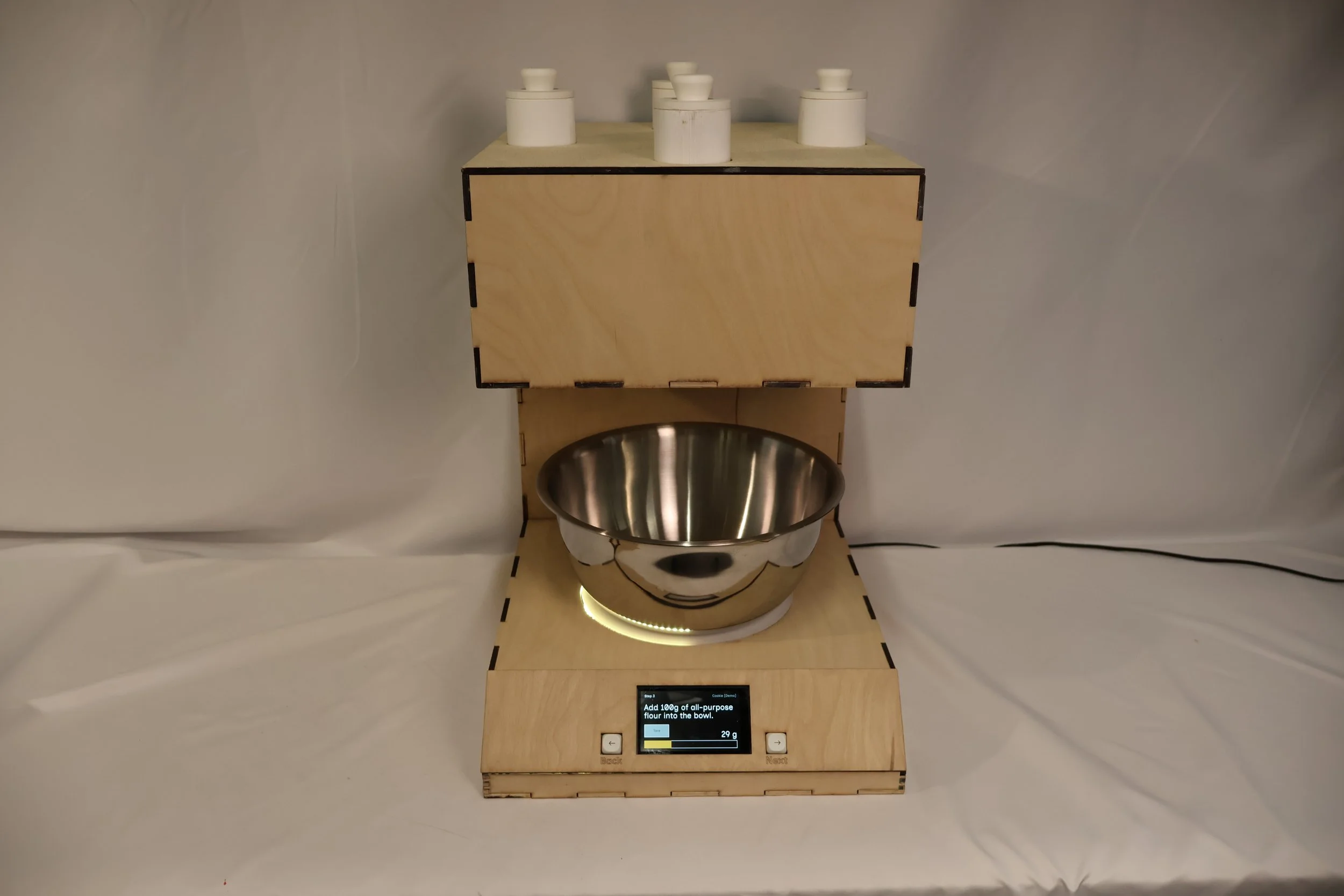
For our senior capstone project in Creative Technology and Design, our team chose to tackle a problem we’ve experienced with our loved ones: how limited hand mobility and dexterity limits people’s ability to bake their favorite recipes. We designed Measurely, an assistive baking device designed to restore independence in the kitchen. It combines an automated dispenser that handles the difficult, precise measurements of small ingredients, with an integrated scale and guided display that simplifies the measuring of large ingredients.
ROLE
My responsibilities included experience design, programming, and full-stack connectivity. I designed and coded the user interface onto our Arduino in C++ using LVGL for graphics. The Measurely landing page and web app are created with HTML/CSS/JS and hosted on GitHub Pages. Recipe data, user logins, and user selections are managed by Firebase.
Research and Problem Space
PROBLEM STATEMENT
As people age, they often lose independence and the ability to care for themselves, making tasks like baking increasingly difficult. The heavy, repetitive, and tedious nature of baking can become barriers, leading to frustration and a sense of loss when activities central to one’s identity are no longer feasible. Baking demands a challenging combination of gross motor strength, such as pouring heavy ingredients, and fine motor precision, like measuring spices and leveling spoons. For millions living with arthritis, Parkinson’s, or similar mobility issues, these fine motor requirements often present insurmountable barriers. Additionally, managing these physical challenges alongside complex recipe steps results in Cognitive-Motor Interference (CMI). Research indicates that attempting to ‘dual-task’—handling physical tremors while recalling instructions—significantly increases error rates and safety risks in the kitchen.
EXISTING PRECEDENTS
Current research highlights a significant tension between specialized functionality and system complexity in modern culinary tools. Digital platforms like the Mela app and specialized hardware such as the Talking Measuring Jug and Auto Measure Spice Rack are praised for their intuitive, accessible designs that address specific pain points. However, they often suffer from limited feature sets or uninspired aesthetics. In contrast, high-end multifunctional devices like the Thermomix and Brava Oven offer expansive capabilities and sleek, modern interfaces that streamline the cooking process. These devices, however, raise concerns about over-complexity, high price points, and the “jack of all trades, master of none” dilemma. Ultimately, the most successful precedents are those that balance precise, step-by-step guidance with a clean user interface, indicating a need for tools that are technologically advanced enough to eliminate guesswork without becoming overly cumbersome for the end user.
OUR PITCH
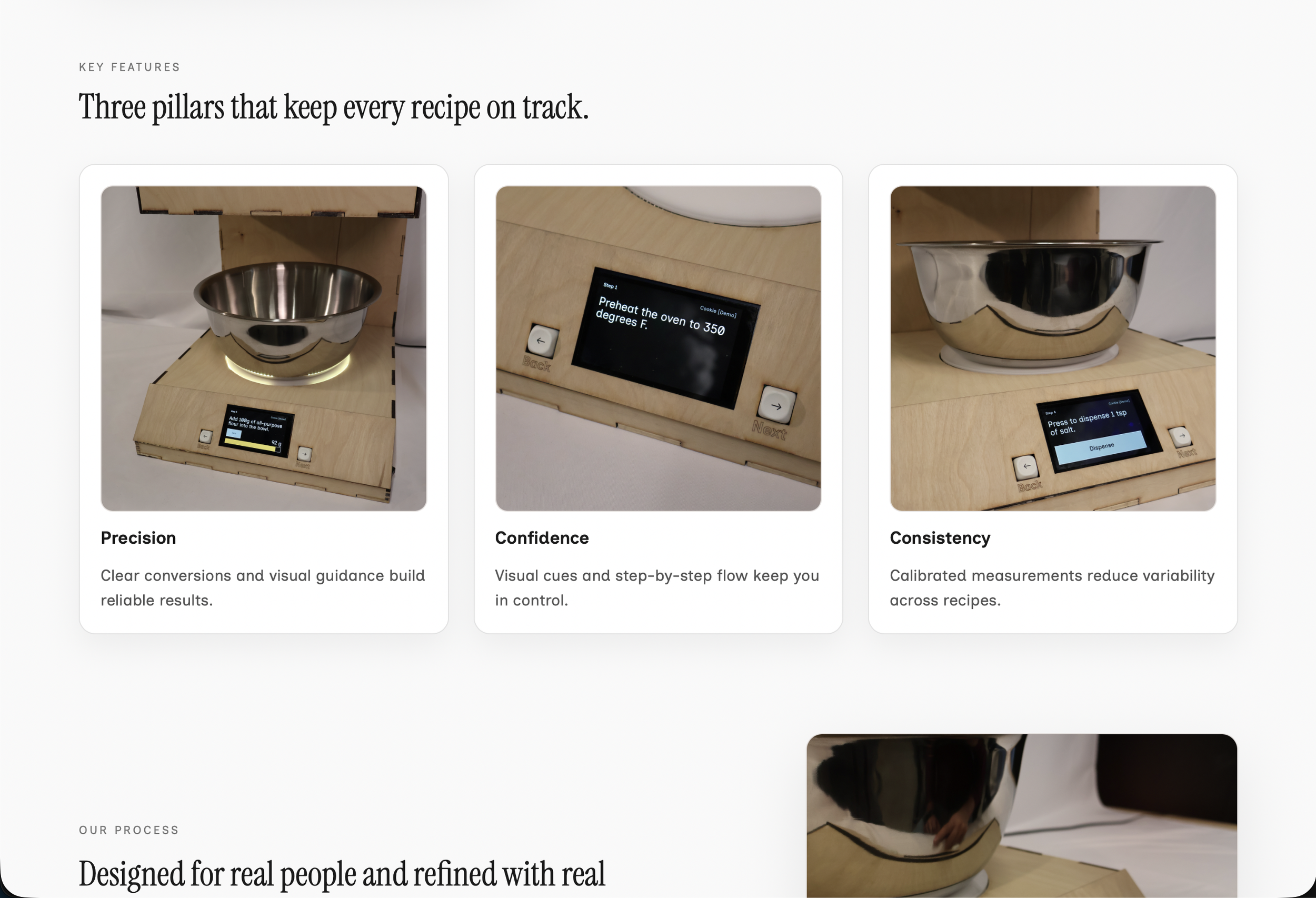
Measurely is an innovative assistive baking device designed to restore independence in the kitchen by addressing the challenge of accurately measuring ingredients. It features an automated dispenser for precise measurements of small ingredients, an integrated scale, and a guided display for simplifying the measuring of larger ingredients. With step-by-step recipe guidance on a built-in screen and web integration, Measurely provides users with simple, guided instructions and assisted measuring steps, enabling them to enjoy the baking experience with greater enjoyment and precision. By automating fine-motor tasks like measuring salt and guiding gross-motor tasks such as pouring flour, Measurely empowers users to bake with confidence, consistency, and precision.
Process
PHASE 1: THE FIRST CONNECTIONS
The first major hurdle was creating a real-time data pipeline between the physical device and a user's digital recipe library.
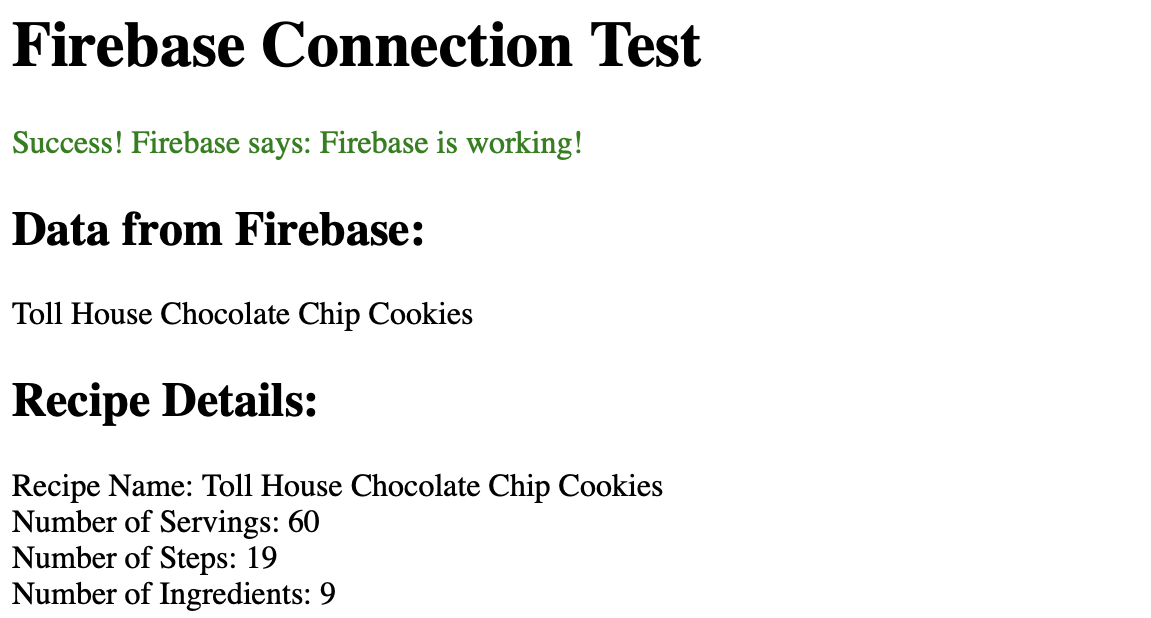
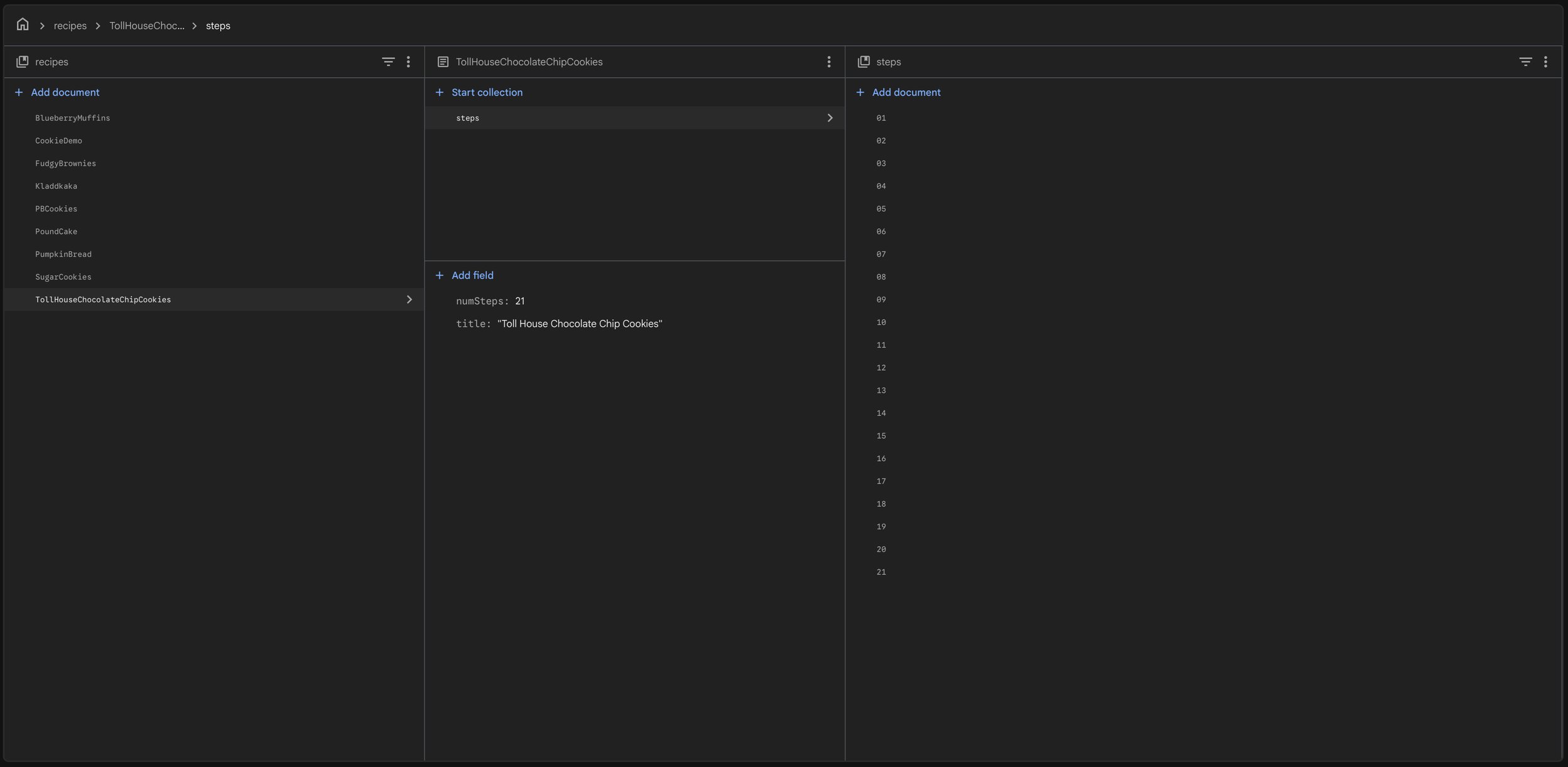
The Breakthrough: One week in, I achieved a "huge win" by successfully pulling data from a Firebase backend into a web app.
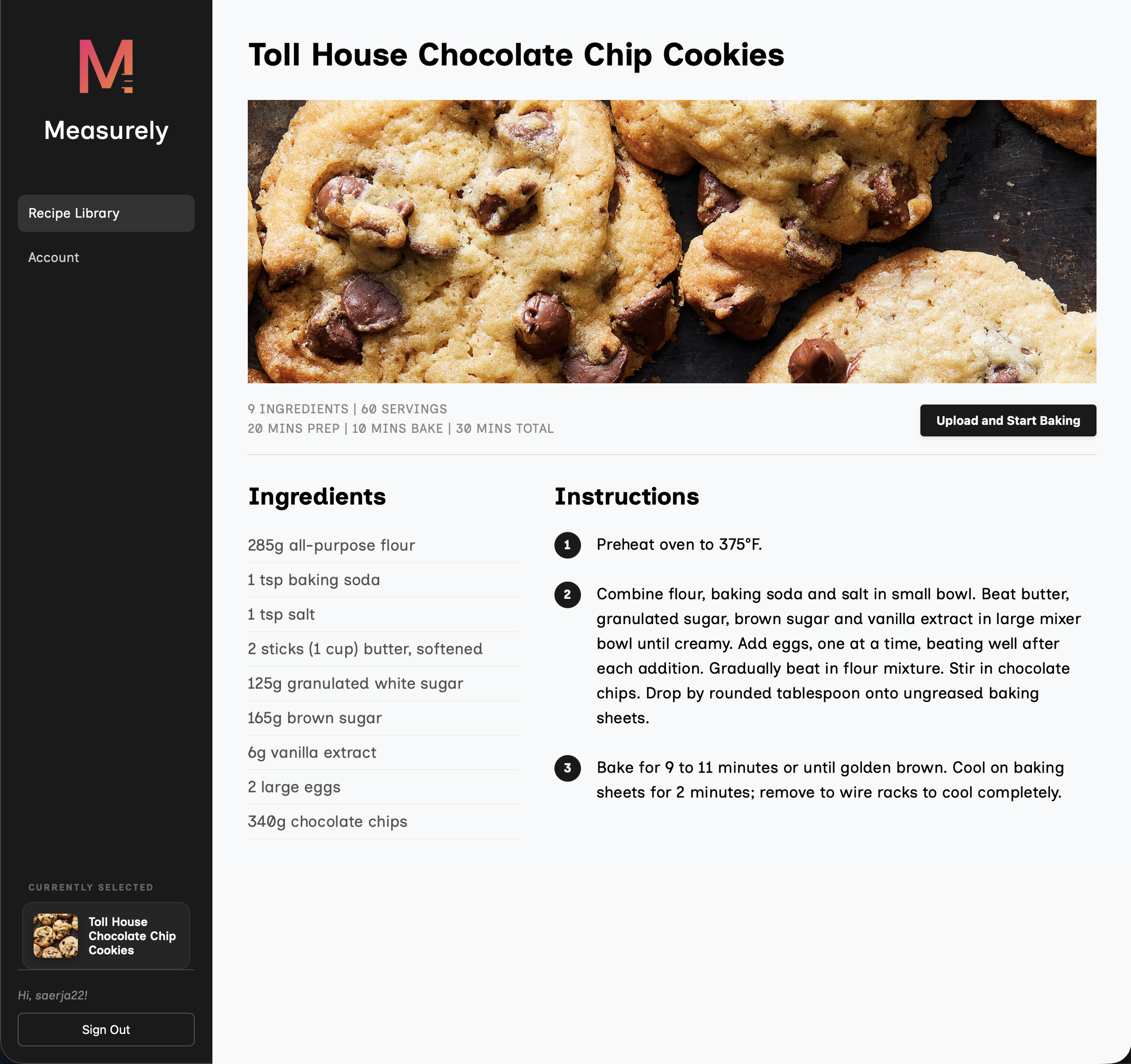
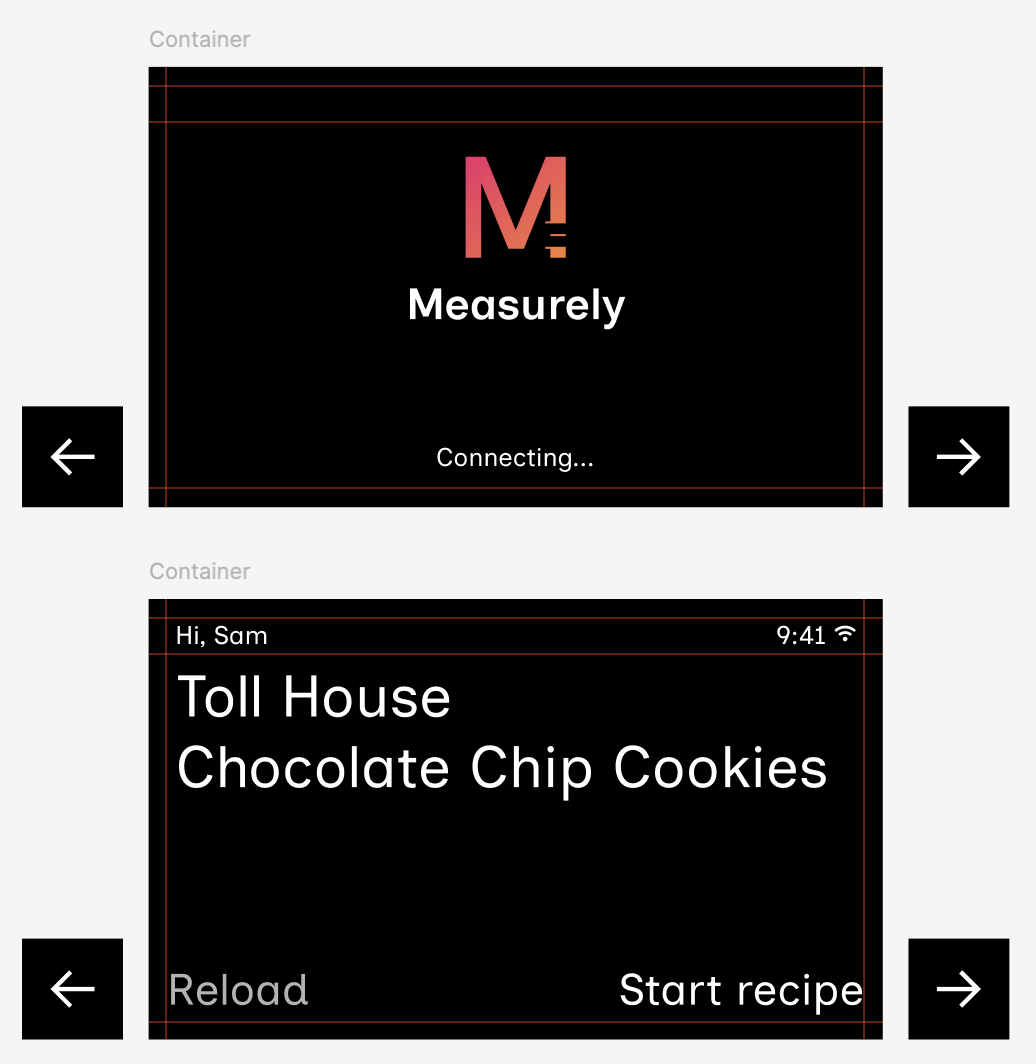
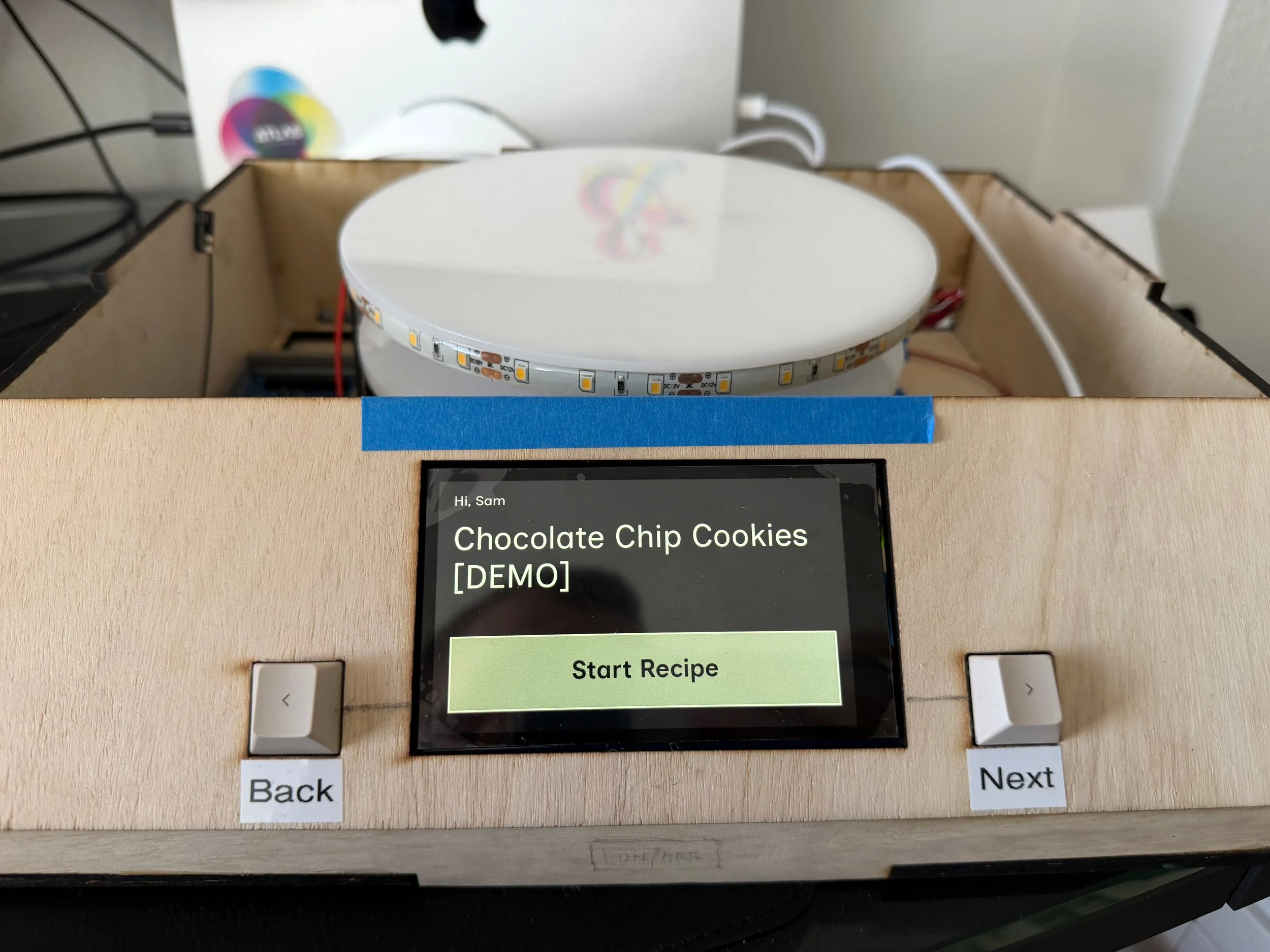
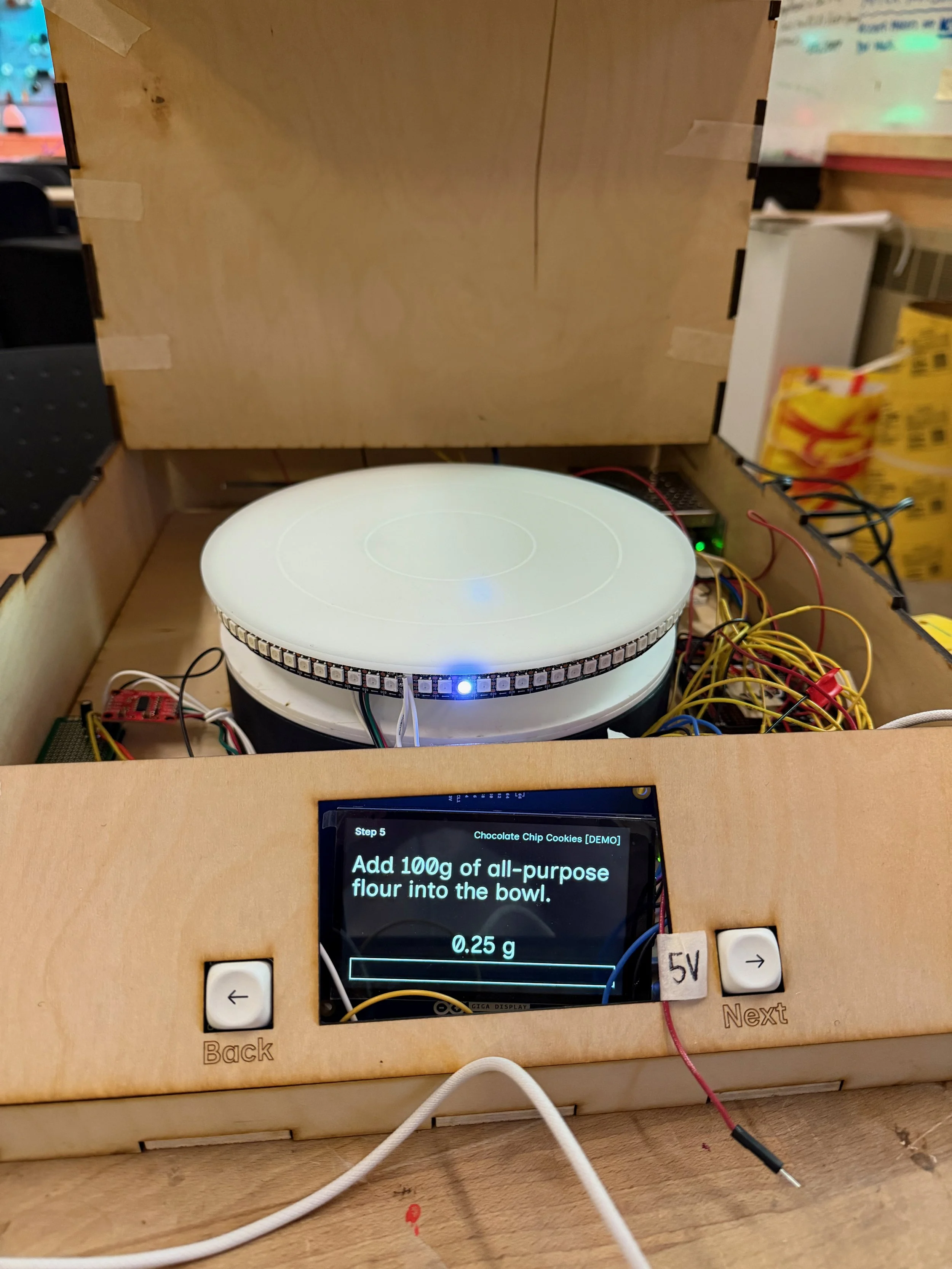
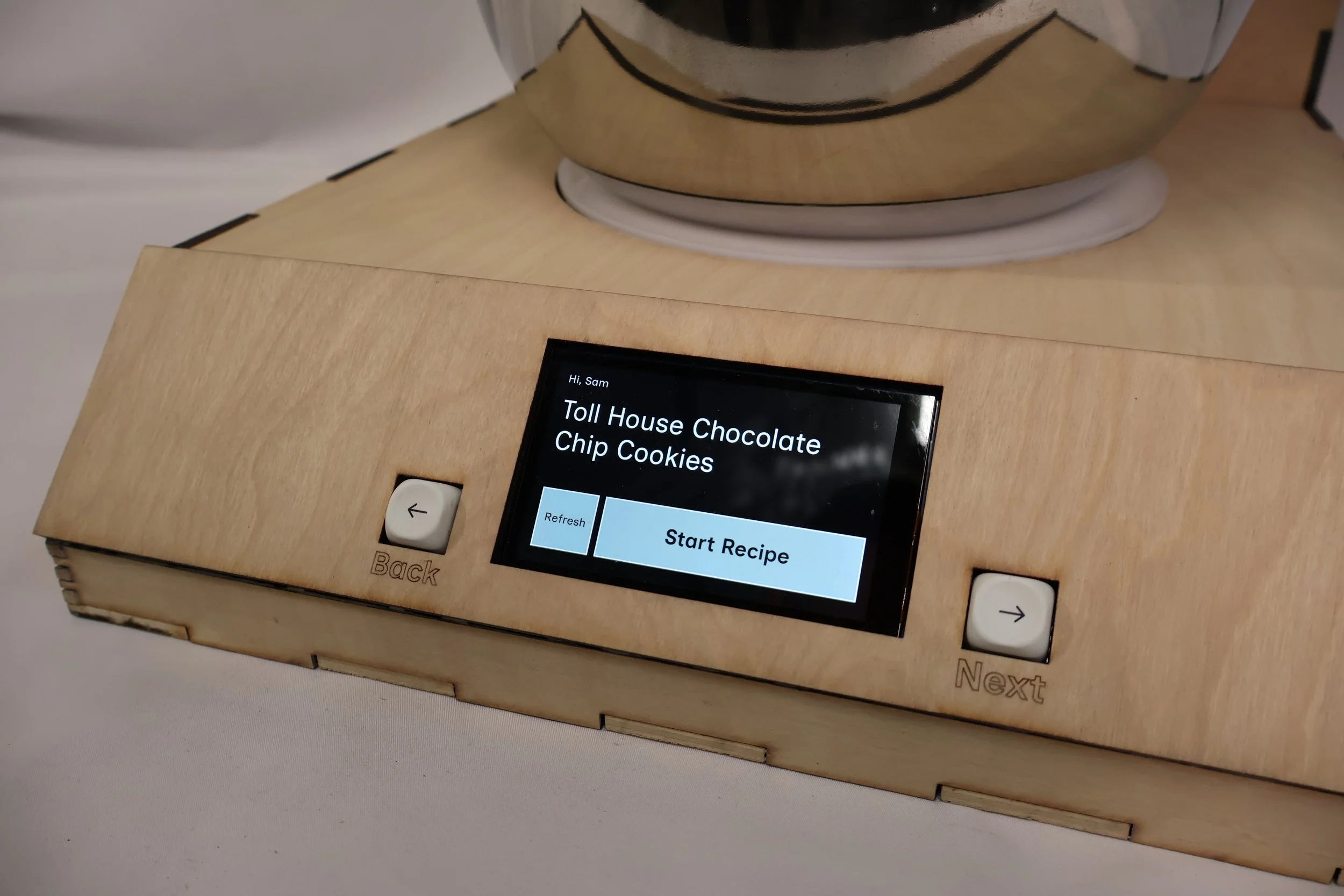
Hardware Handshake: Two weeks in, I successfully translated this to the Arduino environment, pulling specific recipe stats (steps, servings, ingredients) for Toll House Chocolate Chip Cookies directly onto the Giga display.
Security First: I implemented Firebase Auth early on to ensure that user recipe selections were secure and that editing capabilities were blocked behind authentication.
PHASE 2: THE HUMAN-HARDWARE INTERACTION
With data flowing, the focus shifted to the physical experience.
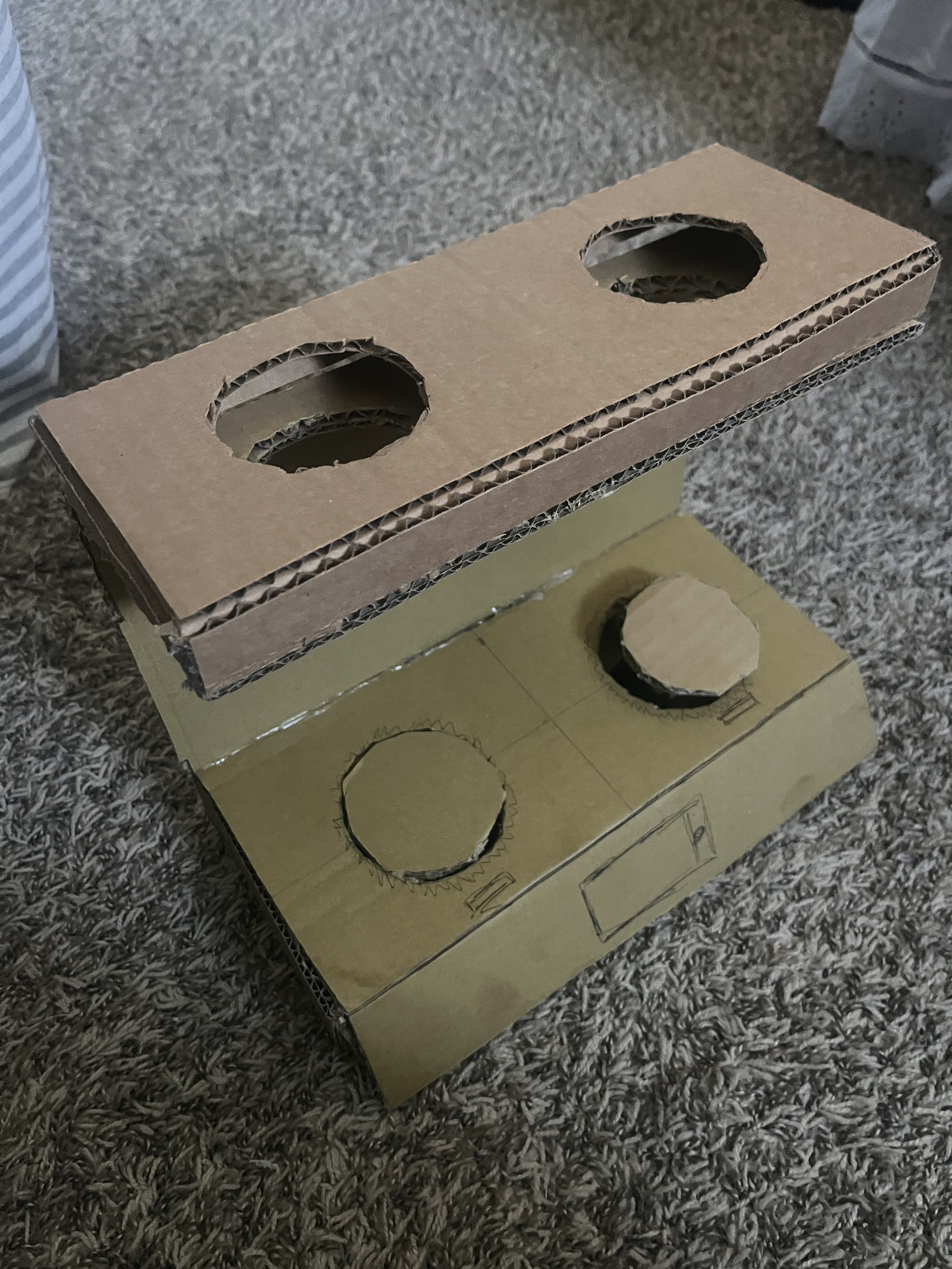
Low-Fidelity Validation: We utilized cardboard prototypes to walk through the user flow, which led to a critical realization: selecting a recipe on a mobile web app was far smoother and more intuitive than navigating a complex library on a smaller hardware screen.
Emphasis on Accessibility: Initial user testing with our primary user, Erika, and a subsequent usability survey challenged our touch-only approach. We discovered that physical buttons provided better feedback for users with motor control issues.
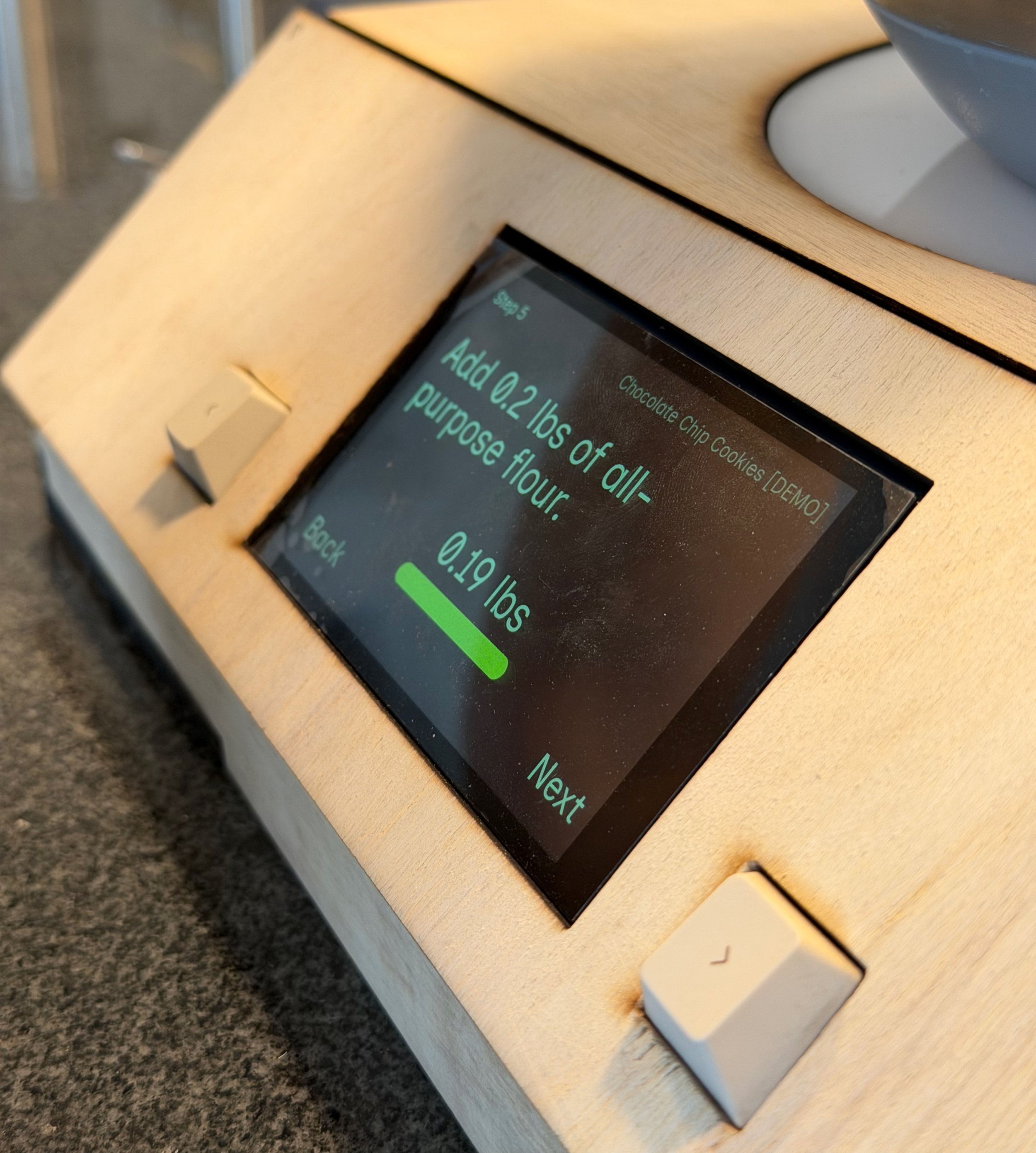
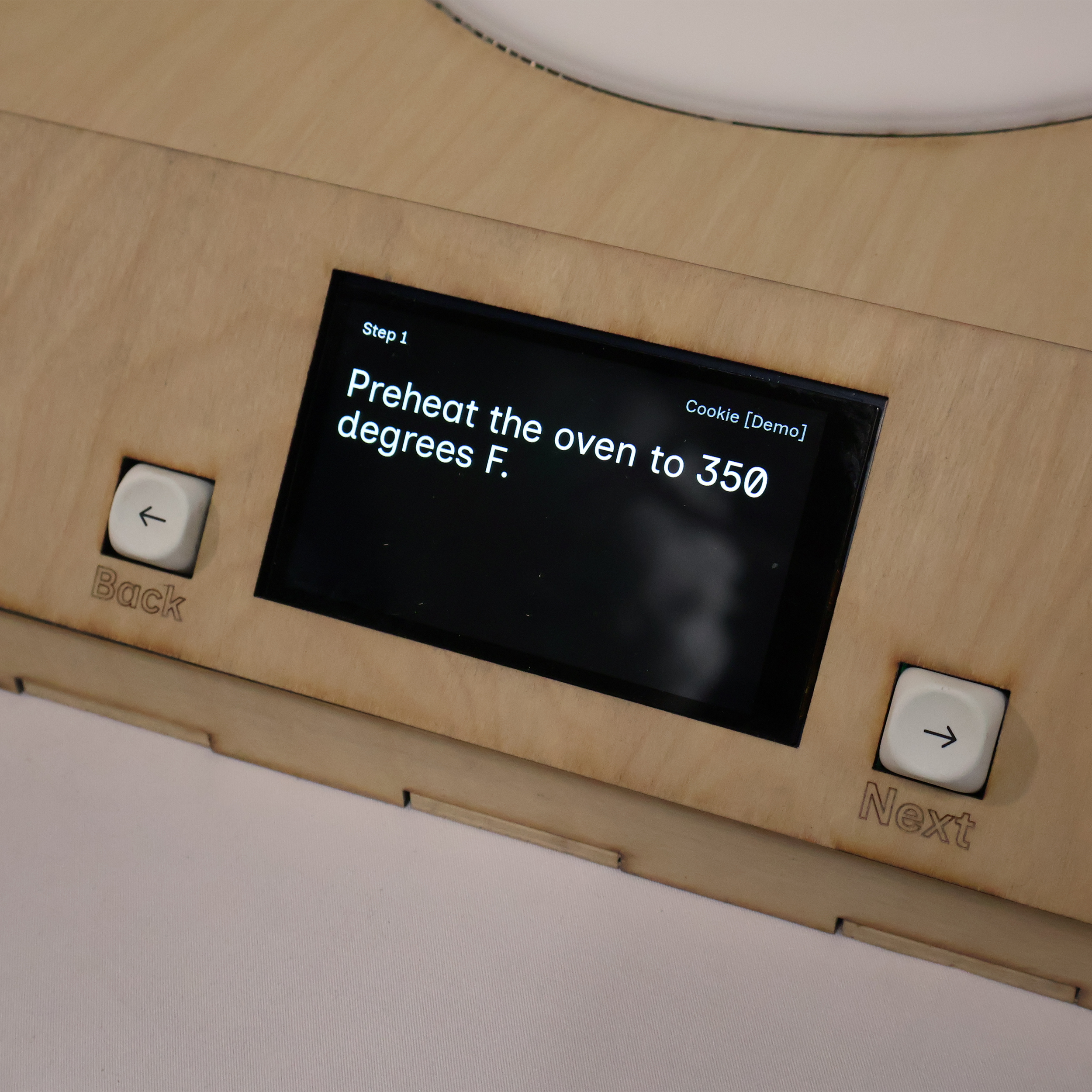
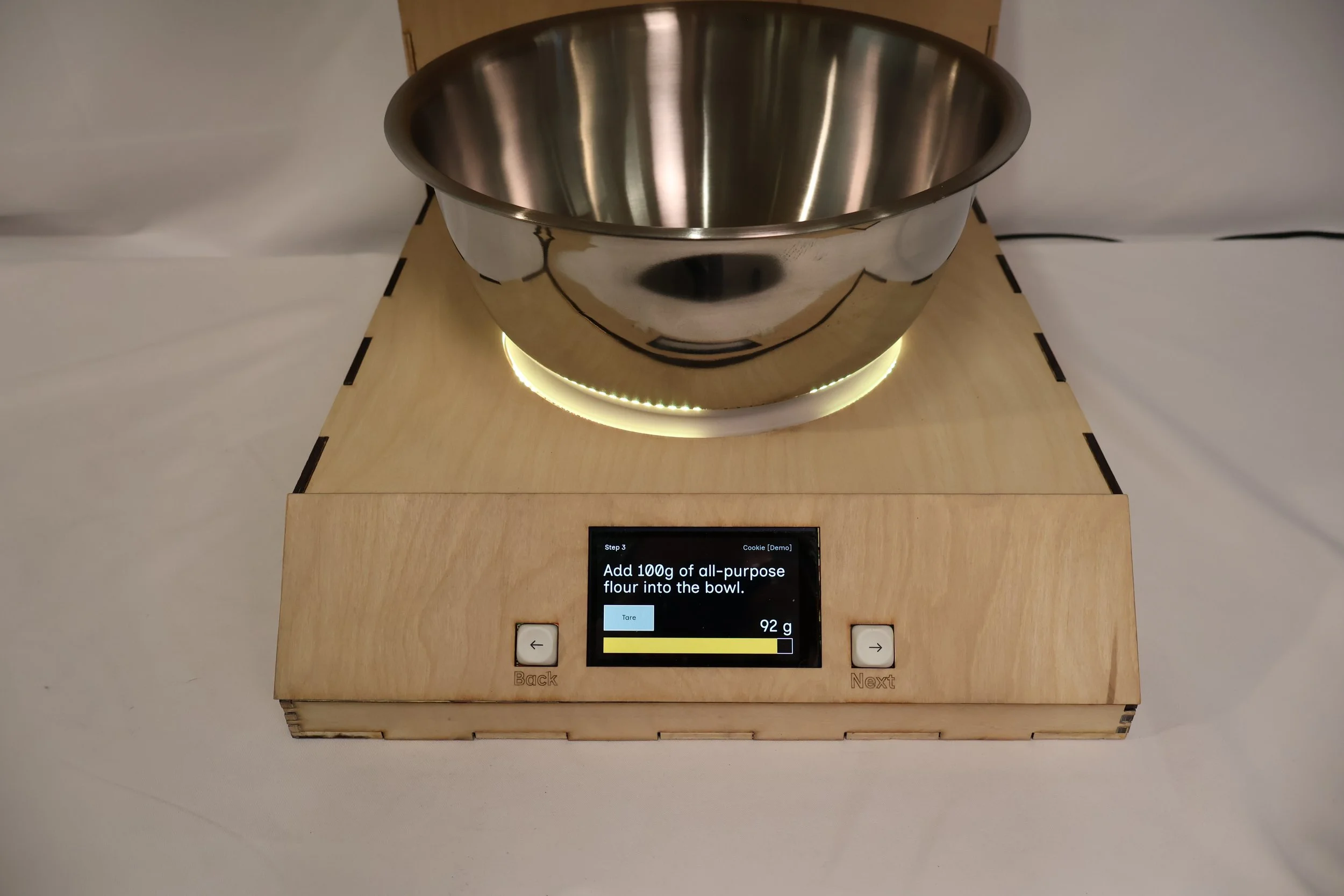
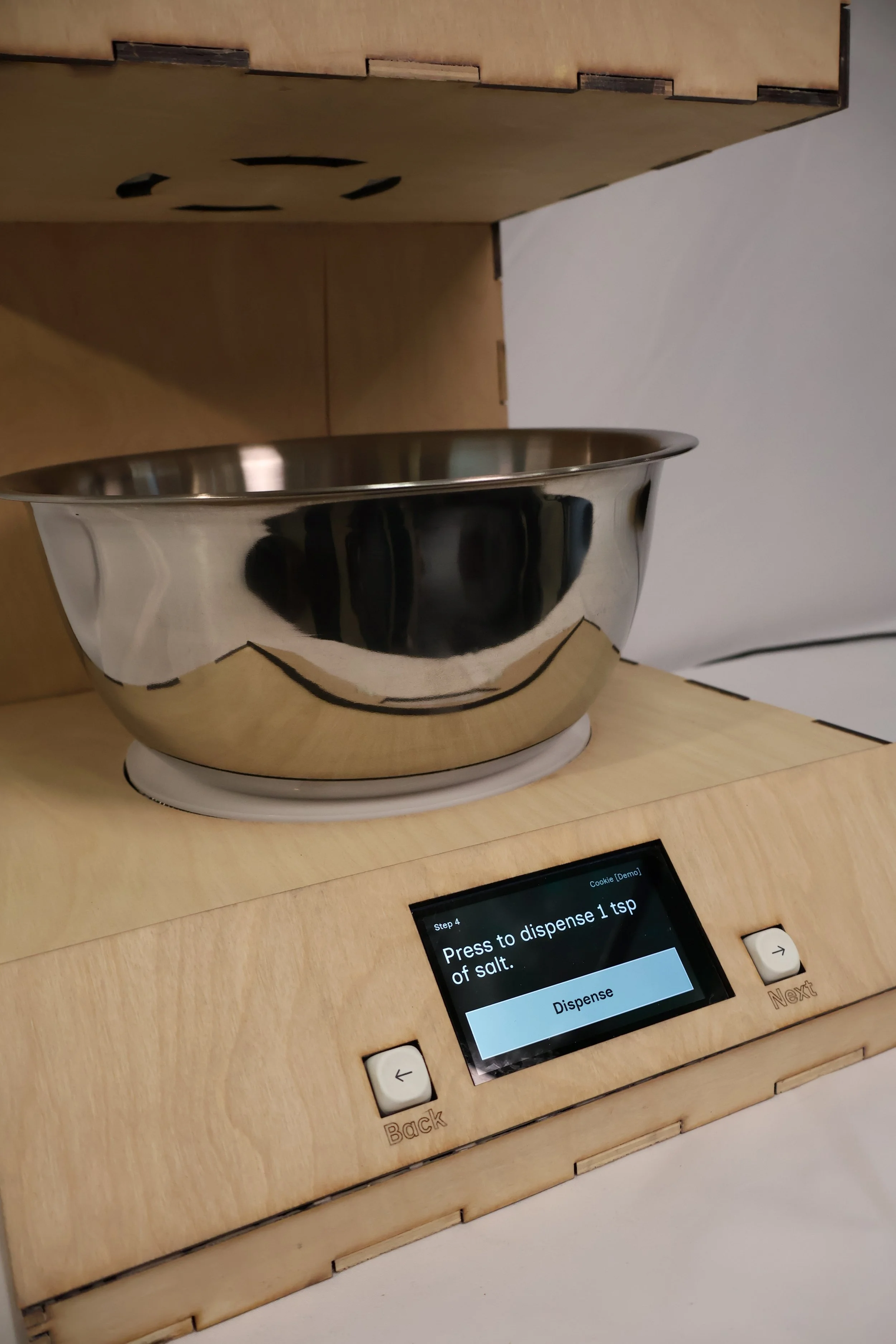
The Hybrid Solution: I redesigned the interface to use tactile, labeled "Back" and "Next" buttons on the enclosure for navigation, while reserving the touchscreen for a massive, context-aware "Dispense" button. We created our first prototype using this interface design, and user testing went well.
PHASE 3: THE ENGINEERING TRENCHES
Prototyping is a cycle of failure and resilience.
Hardware Crisis: In early March, the Arduino Giga died during testing. This necessitated a hardware reset and the implementation of stricter safety measures, including electrical-taping the antenna to prevent future shorts.
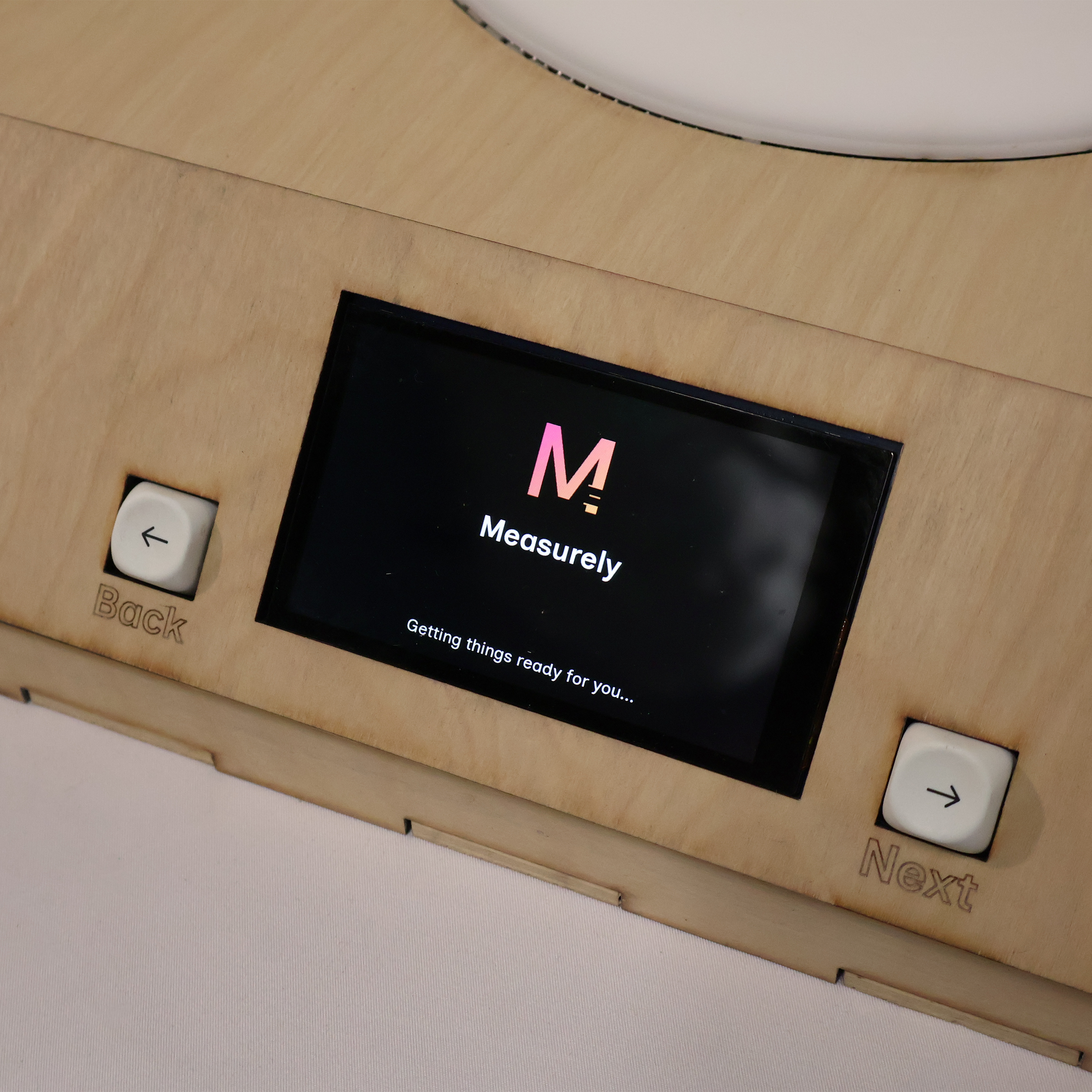
UI Refinement: I used the LVGL library to build a premium interface, integrating custom fonts and logos for a polished, modern look.
Logic Optimization: To combat memory leaks and reduce loading times, I overhauled the database logic to cache the previous, current, and next recipe steps. This ensured the UI felt snappy rather than waiting for a Firebase fetch at every step.
PHASE 4: THE FINAL STRETCH
The final weeks were dedicated to integrating independent hardware components into a functional, cohesive device.
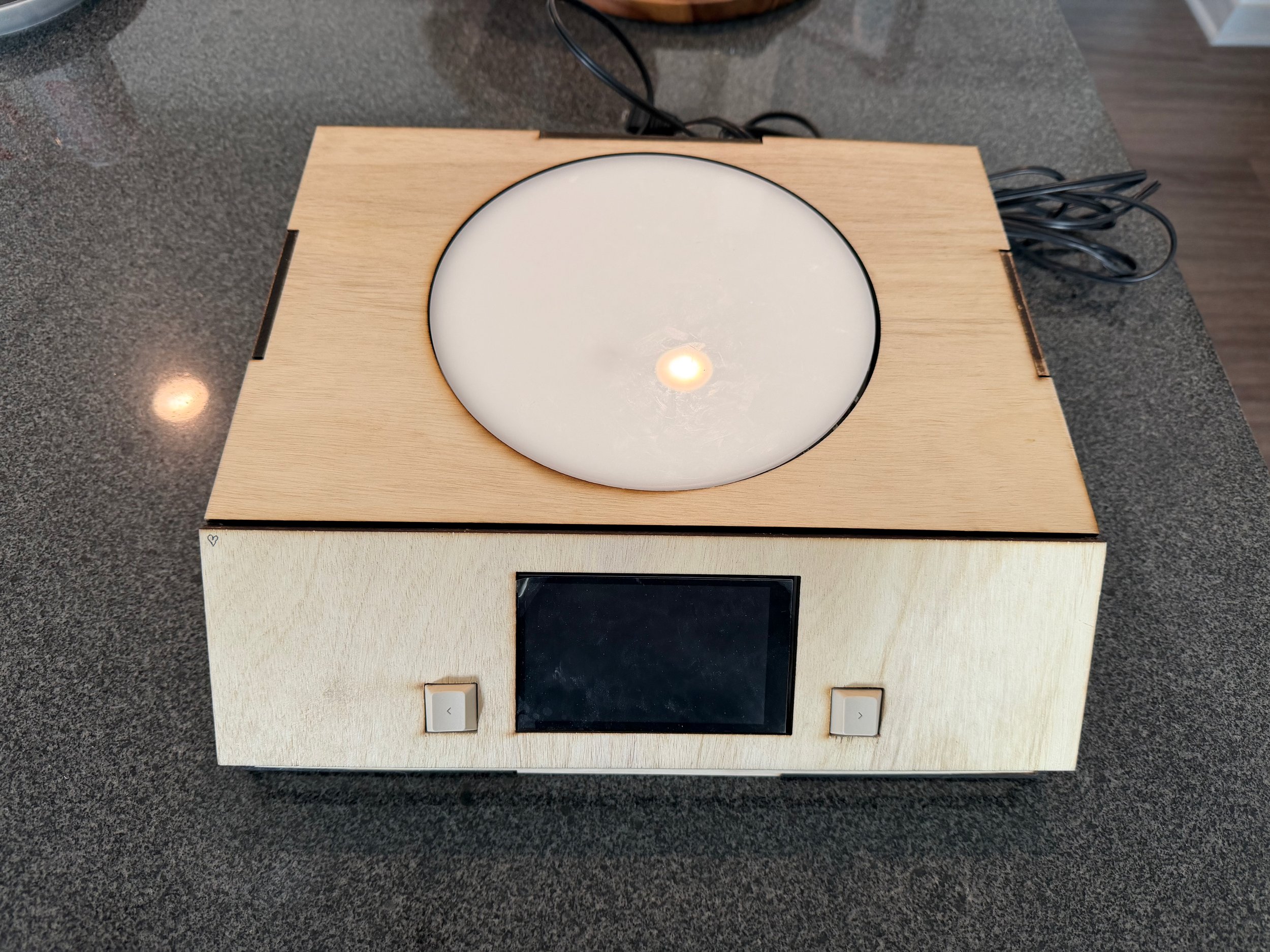
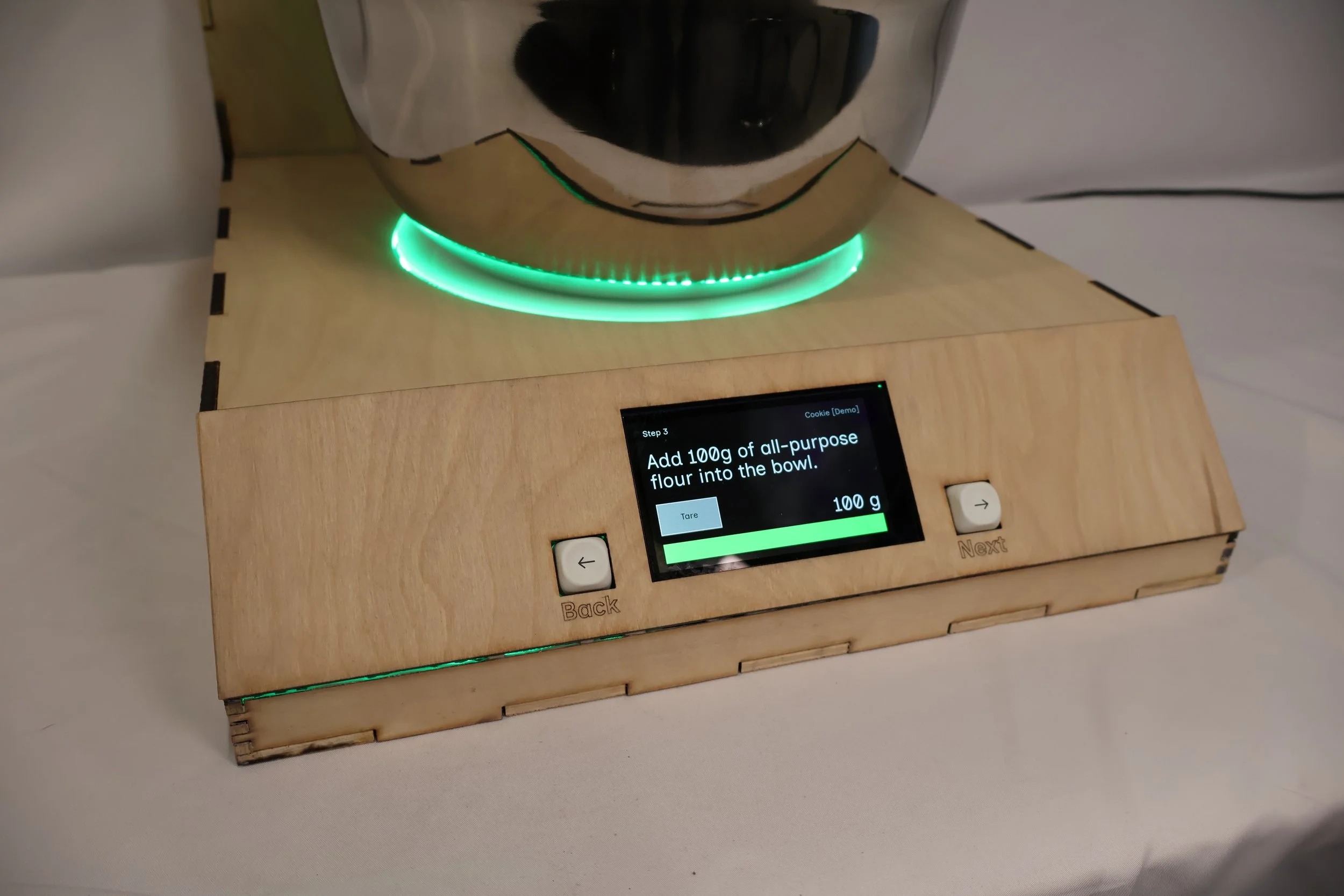
System Integration: I finalized the logic for the LED light ring and scale, ensuring the hardware provided immediate visual feedback as the user approached target weights.
Motor Calibration: I developed specialized code to manage the 4-hopper dispenser system. I mapped specific ingredients—Salt, Baking Soda, Cinnamon, and Baking Powder—to ensure the motor knows where it is, where it needs to go, and how much to dispense.
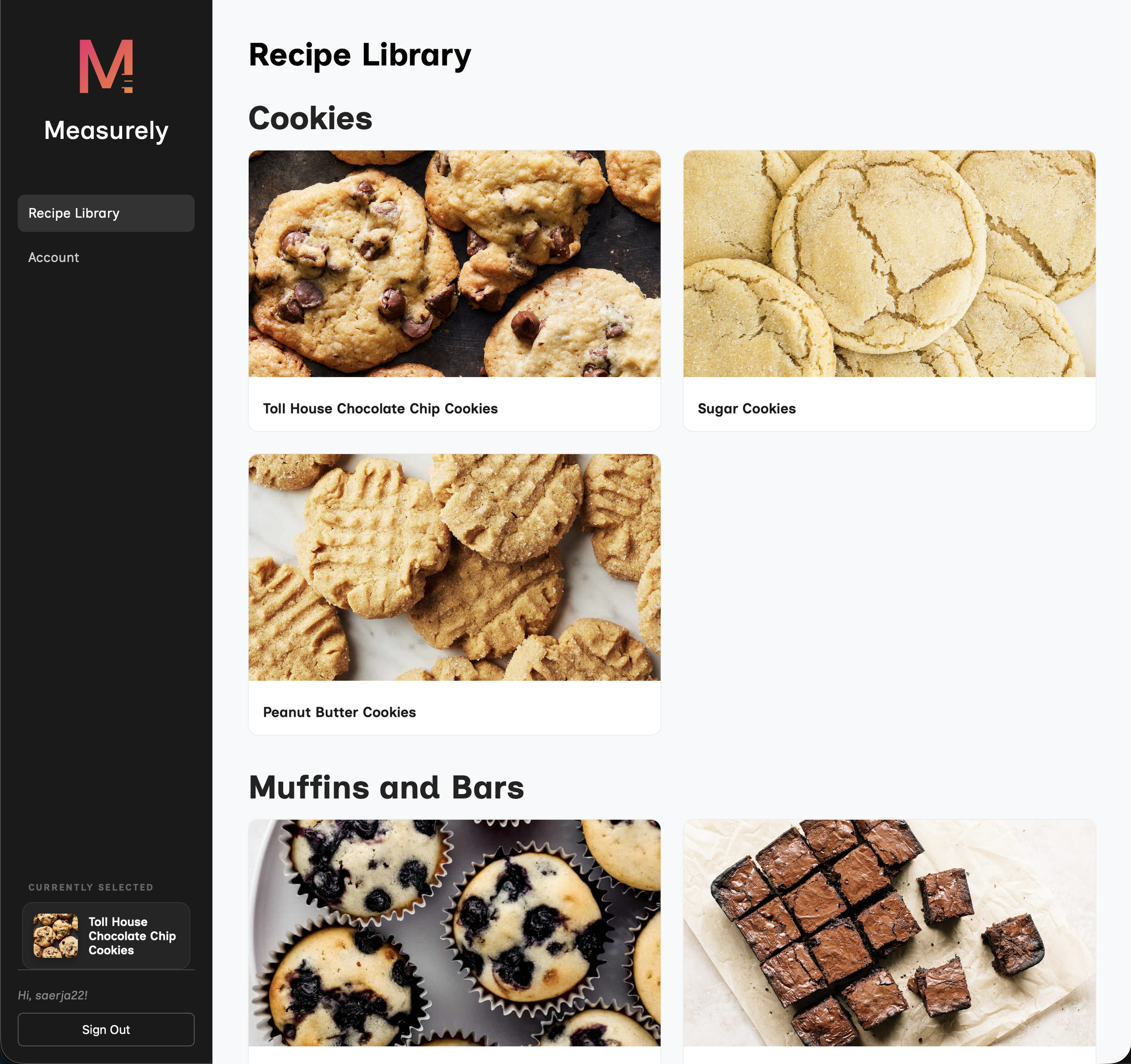
Polished Web App: I transitioned the web app from a demo state to a functional, small-scale Recipe Library, breaking down professional recipes like Toll House Cookies and Swedish Chocolate Cake into machine-readable steps. The web app is designed to be used on a laptop or desktop, as those devices will be most accessible to our users.
Technical Implementation
WEB APP ECOSYSTEM
The companion web app serves as the control center, allowing users to browse a recipe library, view detailed instructions, and upload a recipe to their Measurely device with a single click. It is primarily designed for use on laptops or desktops, as these devices are most accessible to our users.
RECIPE DATA
Firebase stores recipe data, step-by-step instructions, and user selections in the background. When a user activates Measurely, the device automatically retrieves their currently selected recipe. Alternatively, users can press an on-screen button to refresh the loaded recipe if they have chosen a new one. During the recipe walkthrough, Measurely communicates with Firebase to display instructions, set the target weight, and determine ingredient dispensing needs.
SMART SCALE AND LIGHT RING
The load cell scale measures weight in grams and displays it on the integrated screen. Lights form a circle around the scale, acting as a progress bar that turns green when the target weight is reached or red if it is exceeded.
MOTOR LOGIC AND AUGER ALIGNMENT
Measurely features a 4-hopper dispensing system with augers powered by a central motor. The dispensing screw has a “home base” inside Measurely, where it begins and ends each dispensing step. Measurely receives instructions from Firebase on which ingredient to dispense and the amount needed. The stepper motor moves to the correct position, and once the universal key engages with the auger, Measurely accurately dispenses the precise amount of the ingredient.
Finished Product
MEASURELY DEVICE

MEASURELY WEB APP